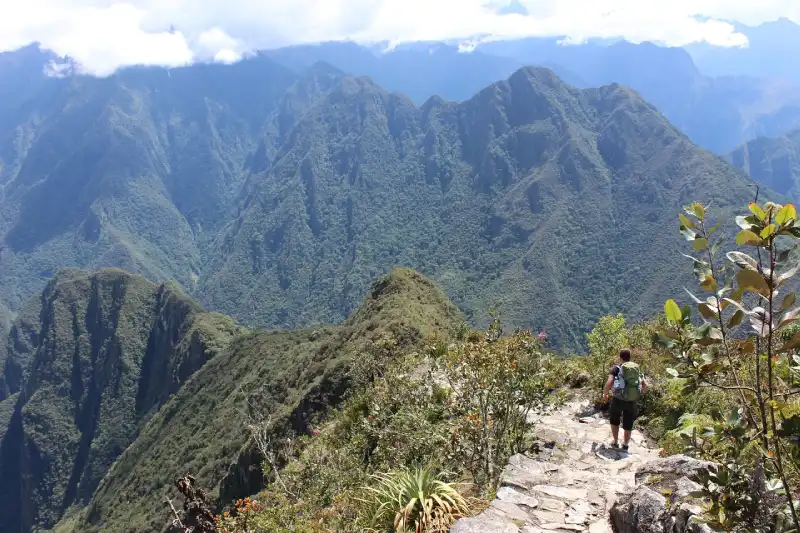

Every year, millions of travelers plan a trip to Machu Picchu. Thousands of them spend years imagining it, the mist, the stone terraces, the extraordinary silence of a citadel built at the edge of the sky. And then most of them take a train back to Cusco the same day, passing through 100 kilometers of one of the world’s most remarkable valleys without a second glance out the window.
That valley is the Urubamba, known to the Inca as the Sacred Valley of the Incas. It held the empire’s most fertile land, its finest temples, its greatest agricultural experiments, and its most important ceremonial sites. Machu Picchu was the crown : but the valley was the kingdom. What follows is a guide to seven places in it that deserve to be on every Machu Picchu tour and packages itinerary, not as afterthoughts, but as destinations in their own right.
100km
The full length of the Sacred Valley, most Machu Picchu tours cover less than a third of it. What lies beyond the standard route is where the valley reveals its real character: uncrowded, unhurried, and extraordinary.
Living Inca Town · 2,792m
Ollantaytambo: Where the Empire Never Ended
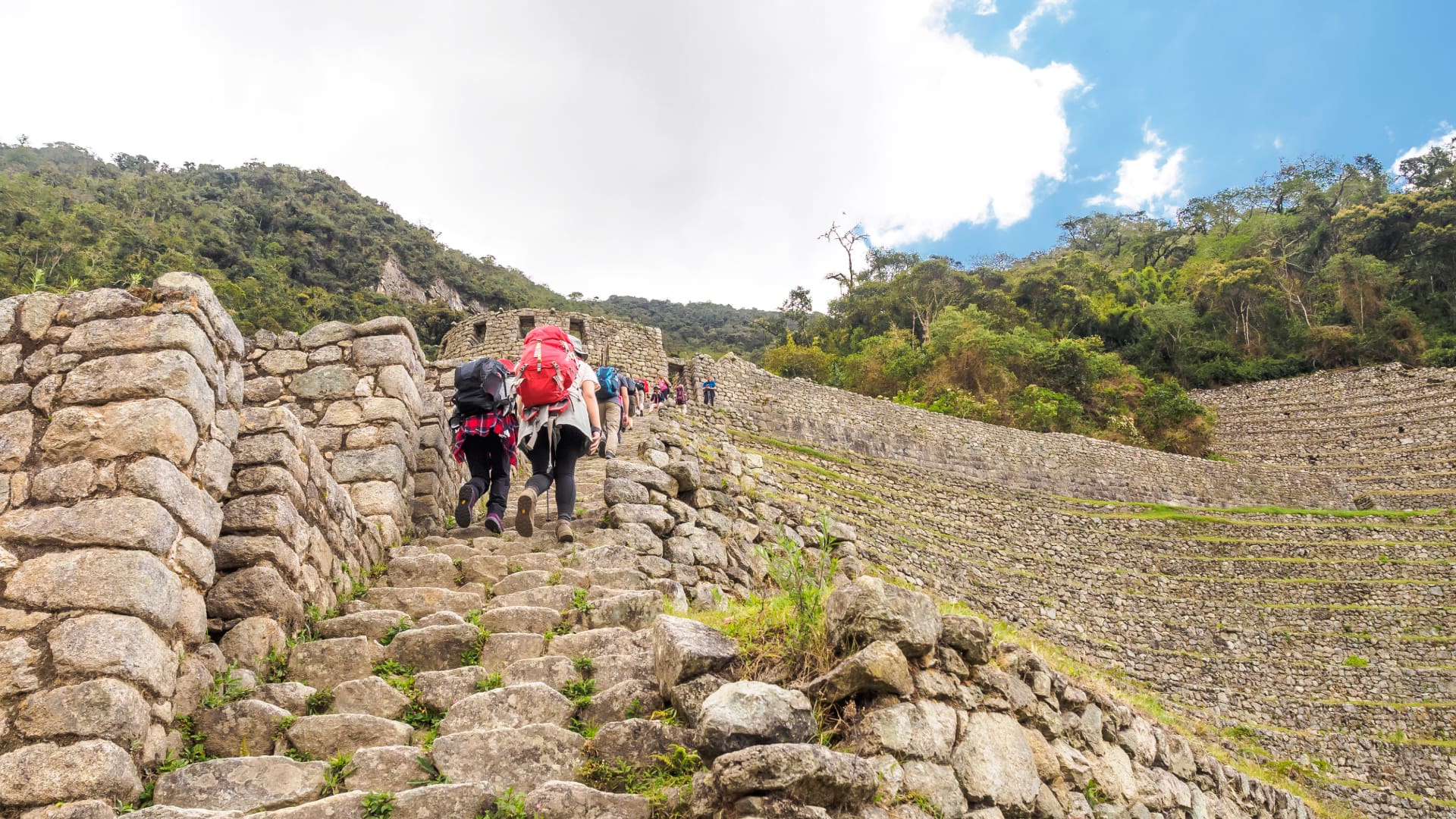
You can tell Ollantaytambo is different the moment you walk its streets. The narrow stone channels running with glacial water along the road edges, the doorways framed by original Inca masonry, the grid of blocks that maps exactly onto a 500-year-old urban plan : this is the only town in the Americas where people still live inside an intact Inca neighborhood. Not a reconstruction. The original.
Above the town, the fortress of Ollantaytambo rises on a series of terraces so steep they feel vertical. It was here that Manco Inca mounted one of the few successful military defenses against the Spanish in 1537, flooding the valley to push back Hernando Pizarro’s cavalry. The stones remember it. Most travelers pass through on their way to the train. The ones who stay a night leave with the clearest memories of the entire trip.
🧭 Insider tip : Arrive before 8am to climb the terraces before any crowds. The view across the valley at that hour is the best in Peru.
Moray: The Inca Climate Laboratory (Agricultural Marvel · 3,500m)
Nothing in Peru prepares you for the first view of Moray. Standing at the edge of the plateau, you look down into a series of massive circular terraces that descend into the earth like the rings of a vast natural amphitheater. The geometry is breathtaking. The purpose is even more fascinating: archaeologists believe Moray was the Inca empire’s agricultural research station : the concentric rings creating microclimates varying by as much as 15°C between the top and bottom rings, enabling the cultivation of dozens of different crops at different altitude conditions simultaneously.
It is, in short, a 500,year-old experiment in food systems science. Standing inside it, looking up at the rings of stone, you begin to understand that the civilization that built Machu Picchu was not just architecturally gifted : it was scientifically sophisticated in ways that continue to astonish modern researchers.
🧭 Insider tip: Walk the full inner circuit, not just the viewing platform. The detail in the drainage engineering alone is worth twenty minutes.
Maras Salt Mines: Three Thousand Pools of Light (Pre-Columbian Salt Works · 3,380m)
The Salineras de Maras are one of those places that stops you mid-sentence. More than 3,000 terraced salt pools cascade down a hillside above the Urubamba Valley, fed by a single underground brine spring that has been flowing, and harvested since before the Inca empire existed. In afternoon light, when the sun catches the whites and blush pinks of different salt grades across the slope, the effect is something between a geological wonder and a work of abstract art.
Local families still own and manage individual pools, continuing a practice that connects directly to pre-Columbian traditions. The salt is sold on-site, in grades from coarse harvest salt to fine mineral varieties. Maras and Moray are almost always visited together and make a half-day combination that most travelers rate among the singular experiences of their entire Peru journey not just their Machu Picchu tour.
🧭 Insider tip: Buy salt directly from a local vendor on the path. It’s exceptional quality and a fraction of what you’d pay in a Cusco shop.
Chinchero: Where Andean Tradition Lives in Thread (Weaving Culture & Colonial History · 3,762m)
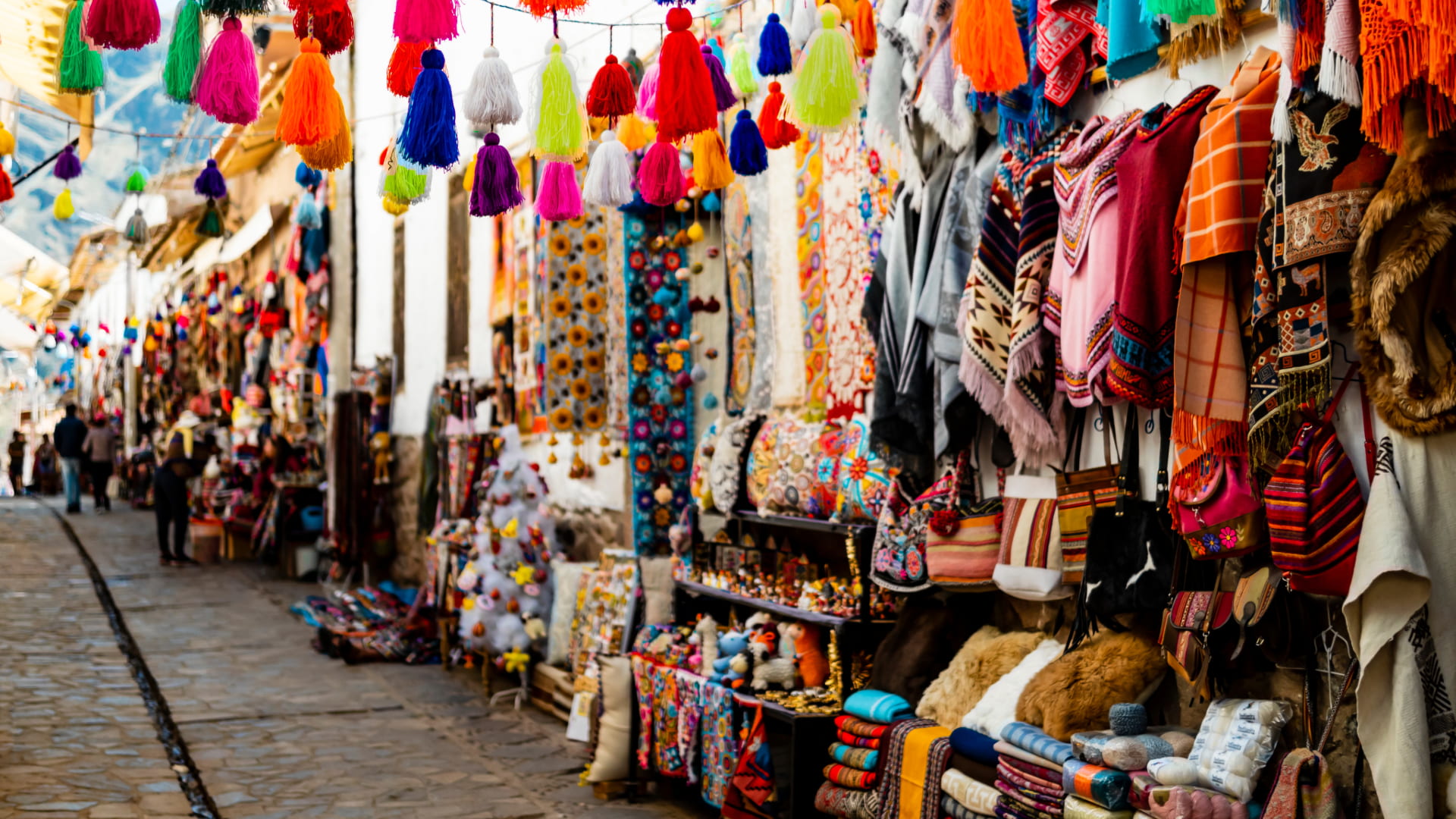
Chinchero sits on the high plateau above the valley at 3,762 meters, and the air here is thin enough to make you walk slowly, which turns out to be exactly the right pace. The town’s identity is inseparable from its weavers: women who produce astonishingly complex textiles using natural dyes extracted from plants, minerals, and insects, following techniques passed through generations with the same precision a musician follows notation.
A Spanish colonial church built directly over an Inca royal palace anchors the main plaza : two civilizations compressed into one wall. The Sunday market here draws primarily local buyers rather than tourists, offering a window into the Valley’s daily rhythms that the more famous Pisac market, for all its spectacle, no longer quite provides. Come for the weavers. Stay because you can’t quite leave.
🧭 Insider tip: Visit a textile cooperative, not a market stall. The full demonstration, from raw alpaca fleece to finished cloth, takes about forty minutes and changes how you see every textile you encounter afterward.
Remote Inca Citadel · 3,600m
Huchuy Qosqo: The Sacred Valley’s Best-Kept Secret
Huchuy Qosqo “Little Cusco” in Quechua, is precisely what the Sacred Valley’s most devoted travelers come back for. Perched on a ridge above Lamay at 3,600 meters, this Inca administrative center includes finely cut stone halls, agricultural terraces, and panoramic views down the full length of the Urubamba Valley that may be the finest vantage point in all of Peru. Almost nobody goes there. The access requires a half-day hike on an unmarked trail. There is no entry gate, no café, no signage, and no queue.
For travelers willing to add one morning hike to their Machu Picchu tour, Huchuy Qosqo offers something that has become genuinely rare in this part of the world: an extraordinary archaeological site experienced in near-total solitude, with nothing between you and the empire but altitude and silence.
🧭 Insider tip: Always hire a guide for Huchuy Qosqo. The trail is unmarked, altitude sickness is a real risk at 3,600m, and an expert guide transforms what you see when you arrive.
Urubamba: The Valley’s Quiet Capital (Valley Capital & Culinary Base · 2,863m)
Urubamba is not a ruin. It doesn’t need to be. As the working capital of the Sacred Valley : a market town, transport hub, and agricultural center it offers something the archaeological sites cannot: life as it is actually lived at 2,863 meters above sea level. In the past decade, a cluster of exceptional boutique hotels and farm-to-table restaurants has put Urubamba on a different map : one that upscale Machu Picchu tours and packages are increasingly built around as a base rather than a waypoint.
The food here deserves special mention. Built on the same extraordinary local ingredients as Cusco’s finest restaurants : native potatoes, quinoa, fresh river trout, Andean herbs : but served without the tourist pricing, Urubamba’s kitchen is honest and remarkable. Staying overnight and eating where locals eat is one of the easiest upgrades available to any Sacred Valley itinerary.
🧭 Insider tip : The market stalls near the bus terminal serve the most authentic food in the valley. Go for breakfast : the quinoa porridge alone is worth the stop.
Pisac, Two Experiences for the Price of One (Ruins, Market & Living Andean Culture · 2,972m)
Pisac is the Sacred Valley’s dual personality made manifest. The ruins above the town : a complex of sun temples, funerary towers, and agricultural terraces spread across a mountain ridge above the river : are among the most significant Inca sites in Peru and receive a fraction of Machu Picchu’s visitor numbers. The views are panoramic and the stonework, in places, rivals anything in Cusco. Below, in the town’s plazas, the Sunday market fills the streets with fresh produce, handmade textiles, locally distilled spirits, and the valley’s finest chicha de jora.
The failure mode here is common: forty minutes in a van, a quick sweep of the market stalls, and back on the road. The travelers who climb to the upper ruins, sit on the terraces with no particular agenda, and stay to watch the light shift across the valley in the late afternoon : those are the ones who come back to Peru.
🧭 Insider tip : Arrive at the Pisac ruins by 7:30am. By 10am the lower site is busy; the upper terraces stay quiet until midday and the views are worth every step of the climb.
Make the Valley Part of Your Journey
Explore Machu Picchu tours and packages that include Sacred Valley days : from focused half-day excursions to fully immersive multi-night itineraries across the valley and beyond.
Is the Sacred Valley worth visiting on a trip to Machu Picchu?
Yes : and for many travelers it proves more rewarding than Machu Picchu itself. Sites like Ollantaytambo, Moray, and the Maras Salt Mines deliver extraordinary Inca history and landscape without the timed circuits and visitor caps now in place at Machu Picchu. Most quality Machu Picchu tours and packages include at least one Sacred Valley day; the best itineraries build in two or more.
Can I visit the Maras Salt Mines and Moray on a Machu Picchu tour?
Absolutely. Maras and Moray are located a few kilometers apart and are typically combined into a single half-day excursion from Cusco or Ollantaytambo. Many Machu Picchu tours and packages include a Sacred Valley day covering both sites before continuing to Aguas Calientes by train. Peru Hikers can incorporate them into any standard or custom itinerary.
How do I add Sacred Valley stops to my Machu Picchu tour package?
Contact Peru Hikers directly when planning your trip. Our team designs custom itineraries that combine Machu Picchu with Sacred Valley stops : Ollantaytambo, Chinchero, Moray, Maras, Pisac, and more : in sequences that make logistical sense and leave room to actually experience each place. Multi-day packages can include Huchuy Qosqo treks, overnight stays in Urubamba, and guided market visits, all in one seamless tour.