
Some destinations ask to be visited. Peru demands to be experienced.
From the mist-wrapped citadel of Machu Picchu to the impossible colors of Rainbow Mountain, from market stalls heaped with native potatoes to Inca stone roads that still carry footsteps after five centuries ; Peru is one of those rare countries where reality consistently outpaces the imagination. Every year, travelers arrive expecting a landmark and leave having discovered an entire world.
This is the Peru bucket list worth building your trip around. Not just the headline attractions, but the meals, the markets, the lesser-known ruins, and the moments between them that no itinerary can fully plan for. Whether you’re comparing Machu Picchu tours and packages for the first time or returning to add new chapters to a story you started years ago, this guide covers everything worth putting on your list ; and exactly how to make it happen.
1. Stand Inside Machu Picchu at Sunrise
There is a version of Machu Picchu that photographs cannot prepare you for. It exists in the forty minutes after the gates open, before the main groups arrive ; when the mist still sits in the valley below the citadel, when the stone terraces catch the first light at a low angle, and when the whole site feels briefly like it belongs to you alone.
Every trip to Machu Picchu should be planned around this window. Book the earliest entry slot available. Take the bus from Aguas Calientes rather than the train connection that arrives later. Accept the early alarm. The citadel at dawn ; quiet, cold, improbably beautiful ; is one of the few travel experiences that earns every superlative ever written about it.
The new 2025 circuit system means your routing through the site is now assigned at entry. Ask your Peru Hikers guide which circuit gives the best light at the time you’re visiting. The difference between the right viewpoint at 7am and the wrong one is considerable.
 Peru Hikers tip: Book your Machu Picchu entry slot as early as 6 months in advance for peak season. Permits sell out fast and cannot be transferred.
2. Hike to Rainbow Mountain (Vinicunca)
Rainbow Mountain ; Vinicunca in Quechua ; sits at 5,200 meters above sea level and earns its name completely. The mountain’s flanks are striped in bands of red, gold, green, purple, and white, the result of different mineral sediments exposed by glacial erosion over thousands of years. It looks, to a first-time viewer, like someone has painted it.
The hike to the summit is genuinely demanding. From the trailhead at approximately 4,300 meters, the ascent covers around 7 kilometers at high altitude with significant elevation gain. Altitude sickness is a real concern. Acclimatizing in Cusco for at least two nights before attempting the hike is strongly recommended, and most reputable Machu Picchu tours and packages that include Rainbow Mountain build this preparation time into the itinerary.
The reward at the top ; a panoramic view across the Andean range with the striped mountain below and snowcapped peaks above ; is one of the most visually extraordinary moments available to any traveler anywhere on earth. Go prepared. Go early. Go.
Peru Hikers tip: Start the hike before 6am to reach the summit before afternoon clouds roll in. Clear skies are the difference between a good photo and an unforgettable one.
3. Walk the Classic Inca Trail ; All Four Days
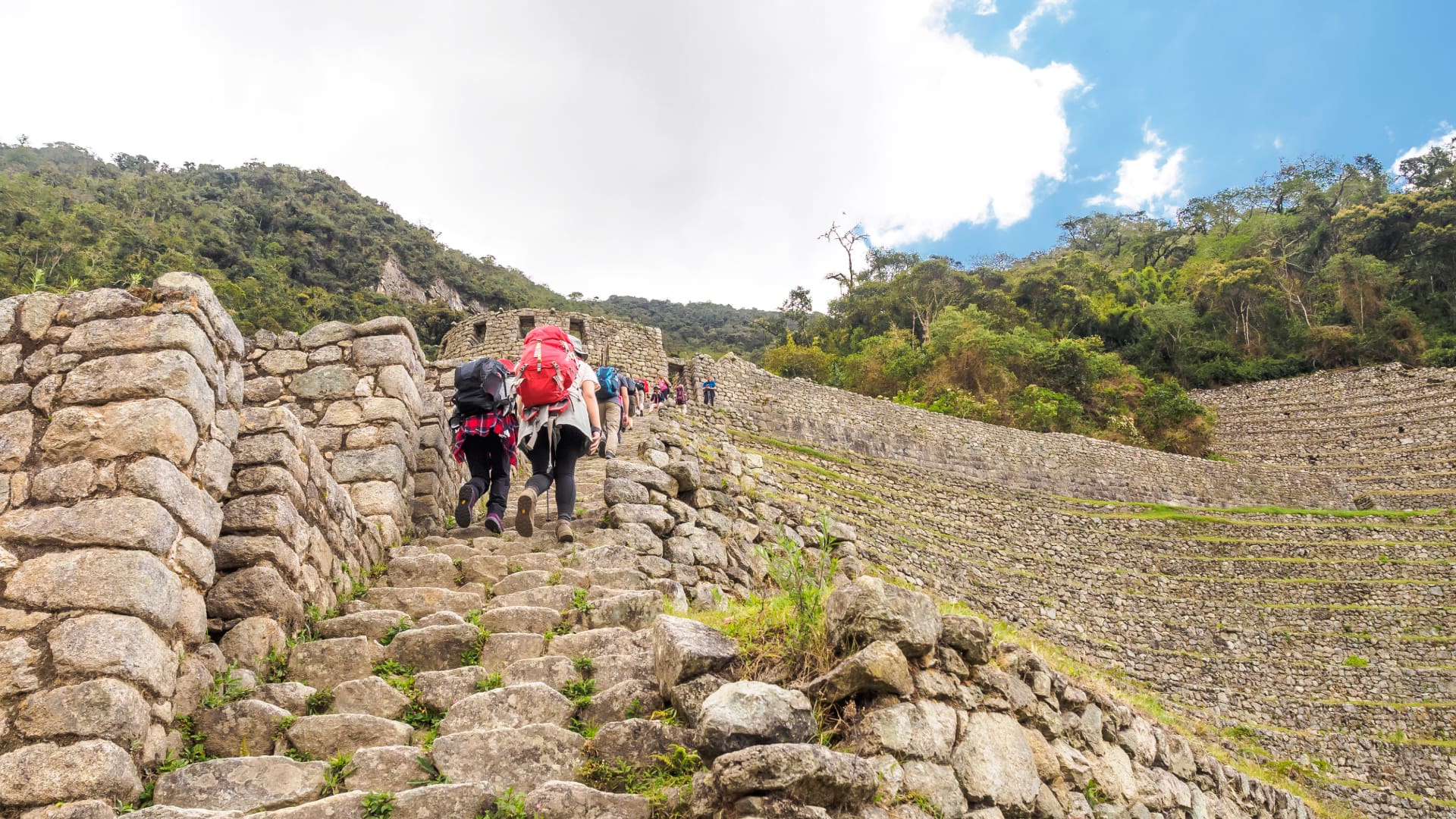
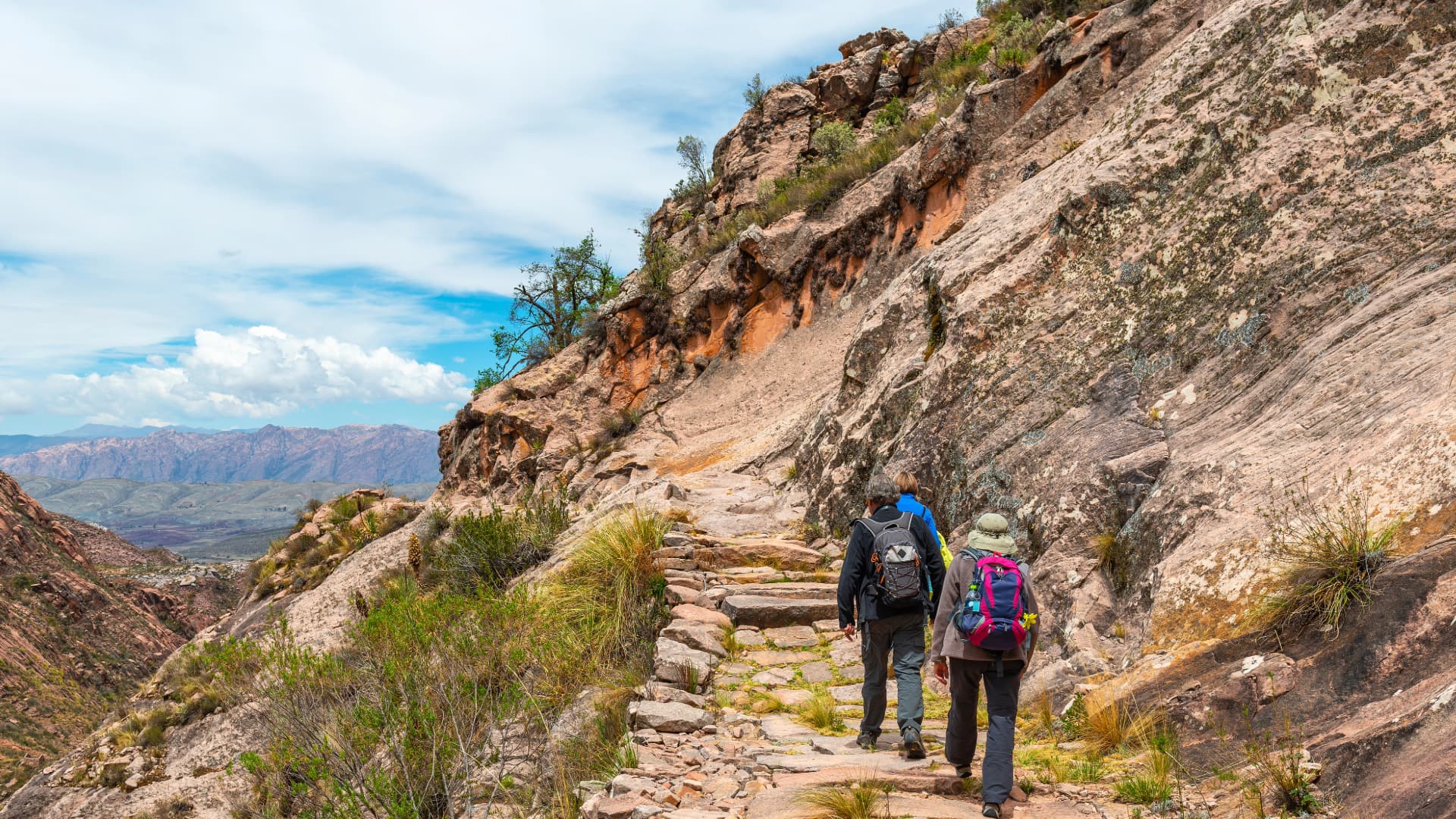
The Classic Inca Trail is 43 kilometers of ancient Inca road through cloud forest, high mountain passes, and pre-Columbian ruins. It takes four days on foot. It arrives at Machu Picchu through the Sun Gate ; Inti Punku ; on the final morning, descending toward the citadel as the valley mist clears below.
No train journey, no bus approach, and no day tour replicates what it feels like to walk those last kilometers knowing the route beneath your feet is the same one Inca runners and pilgrims used five hundred years ago. The physical effort is real. The altitude, peaking at Dead Woman’s Pass at 4,215 meters on day two ; demands genuine fitness and proper acclimatization. But the payoff is proportional: an arrival at Machu Picchu that carries the weight of every step taken to get there.
Permits for the Classic Inca Trail are capped at 500 per day and sell out months in advance, particularly for the May-to-September peak season. If this is on your list ; and it should be ; book early.
Peru Hikers tip: Train for the altitude, not just the distance. Spend at least three nights in Cusco before your trail departure date and take easy walks on acclimatization days.
4. Eat Ceviche in Lima Before You Do Anything Else
Peru’s food scene is not a footnote on a travel itinerary. It is, for a growing number of visitors, the primary reason to come. Lima regularly places multiple restaurants on the world’s top-50 lists. The country has one of the world’s most extraordinary culinary pantries ; over 3,000 varieties of native potato, dozens of chili varieties, Pacific seafood, Amazon ingredients, and centuries of culinary fusion between Andean, Spanish, Japanese, and Chinese traditions.
Ceviche is where it starts. Fresh raw fish cured in lime juice, cut through with ají amarillo chili and red onion, served with leche de tigre ; the citrus-spice curing liquid ; on the side. In the right cevichería in Miraflores or Barranco, it is one of the most precise and alive flavors you will ever encounter. The rest of Lima’s food scene opens from there: causa, lomo saltado, tiradito, pisco sours at sunset over the Pacific.
Most Machu Picchu tours begin in Lima. The smart move is arriving a day early and treating that first day as a culinary orientation. By the time you reach Cusco, you’ll understand the food in a different way.
Peru Hikers tip: Go to a proper cevichería, not a hotel restaurant. Ask locals where they eat. The best ceviche in Lima is never in a place that advertises aggressively to tourists.
5. Visit Ollantaytambo ; and Stay the Night
Most travelers pass through Ollantaytambo on their way to the Machu Picchu train. This is a significant miscalculation. Ollantaytambo is the only town in the Americas where people still live inside an original Inca urban grid ; the same stone streets, water channels, and residential blocks that the empire built in the 15th century. The terraced fortress above the town is one of the finest examples of Inca military and agricultural architecture in Peru.
It was also the site of one of the most remarkable episodes of the Spanish conquest: in 1537, Manco Inca successfully defended Ollantaytambo against Hernando Pizarro by flooding the valley and forcing the Spanish cavalry to retreat. The stones of the fortress have carried that history ever since.
Stay overnight. Walk the town at dusk when the tour groups leave. Eat at a restaurant run by a local family on one of the side streets. The cobblestones at night, lit by a single lamp, with the fortress dark above you and the Urubamba river audible in the distance ; this is the Sacred Valley at its most honest.
Peru Hikers tip: Ask your Peru Hikers guide to book a room in the old town rather than the newer hotel district. The difference in atmosphere is significant.
6. See the Maras Salt Mines and Moray in the Same Morning
These two sites sit a few kilometers apart above the Sacred Valley and together constitute one of the most visually astonishing half-days in South America. Moray first ; the circular Inca agricultural terraces that descend into the plateau like a giant natural amphitheater, believed to be the empire’s experimental climate laboratory. Then Maras ; more than 3,000 terraced salt pools fed by an underground brine spring that has been flowing and harvested since before the Inca empire existed.
The salt pools in afternoon light are somewhere between a geological feature and a painting. Locals still own and manage individual pools. The salt is sold on-site and is genuinely worth buying ; exceptional mineral quality at a fraction of what any specialty shop would charge.
These sites are increasingly included in Machu Picchu tours and packages that build in a Sacred Valley day. If yours doesn’t include them, request the addition. The logistics are straightforward and the reward is out of all proportion to the detour.
Peru Hikers tip: Visit Moray in the morning for the best light on the terraces, then head to Maras in mid-afternoon when the salt pools catch the sun at their most spectacular angle.
7. Drink Chicha de Jora in Pisac on a Sunday
The Pisac Sunday market is the most famous in the Sacred Valley and, at its market stall level, the most tourist-facing. What matters is finding the food section and the chicha sellers ; look for the red-and-white flag hung outside a doorway, the universal signal that fresh chicha de jora is being sold inside.
Chicha de jora is fermented corn beer, brewed fresh by local families in the same way it has been made since Inca times. It is mildly alcoholic, slightly sour, earthy, and completely specific to this place. Drinking a small glass of it in a courtyard in Pisac on a Sunday morning, with the ruins visible on the ridge above, is one of those travel moments that has nothing to do with checking a box and everything to do with being somewhere real.
After the market, climb to the Pisac ruins on the ridge. Most visitors skip this entirely. The stonework up there rivals anything in Cusco, and the view down the full length of the Sacred Valley from the sun temple terrace is among the finest in Peru.
Peru Hikers tip: Arrive in Pisac before 9am for the market at its most local. By 11am the tourist buses have arrived and the character of the market shifts noticeably.
Why Peru Hikers?
Planning a bucket list of this scop,; Machu Picchu, Rainbow Mountain, the Inca Trail, the Sacred Valley, Lima’s food scene ; requires more than a list. It requires an itinerary that sequences these experiences correctly, accounts for acclimatization time, books permits well in advance, and connects you with guides who know the difference between a good viewpoint and the right one.
Peru Hikers has built Machu Picchu tours and packages around exactly this kind of depth. Whether you want a focused 5-day Machu Picchu circuit or a 14-day journey through the full breadth of what Peru offers, our team designs itineraries that treat the country seriously ; as the extraordinary destination it is.